- Email salesman8@yctshirt.cn
- TEL/WECHAT +86-15876493800
- WhatsApp +86-15876493800
- Email salesman8@yctshirt.cn
- TEL/WECHAT +86-15876493800
- WhatsApp +86-15876493800
B2B Garment Manufacturing Solutions
Dedicated 1-on-1 service for brands — from design concepts, sketches and tech packs to reference samples.
- T-shirts, base layers, hoodies, jackets & co-ord sets
- Private-label trims & packaging
- Fit sessions & pre-production approval
Custom Yoga Wear Manufacturer
Yoga and activewear in bonded and seamless knit
We produce yoga leggings, bras and tops in bonded and seamless constructions, where a flat seam matters more than a high stitch count. Fabric is sourced for stretch recovery and opacity, and each style is checked under stretch before the sample goes out.
- Constructions: bonded seams, seamless knitting, four-way stretch
- MOQ: 100 pcs per style per colour, fully custom
- Sampling in 3–7 days · 150,000–200,000 pcs monthly capacity
- 18,000+ m² across 4 production lines · ISO 9001 certified since 2009
Planning a production run? See our yoga wear manufacturing page or seamless construction page for minimums, sampling times and what to send for a quote.
Explore other categories: Polos · T-shirts · Hoodies · Jackets · Pants · Shorts · Joggers · Seamless & Bonded
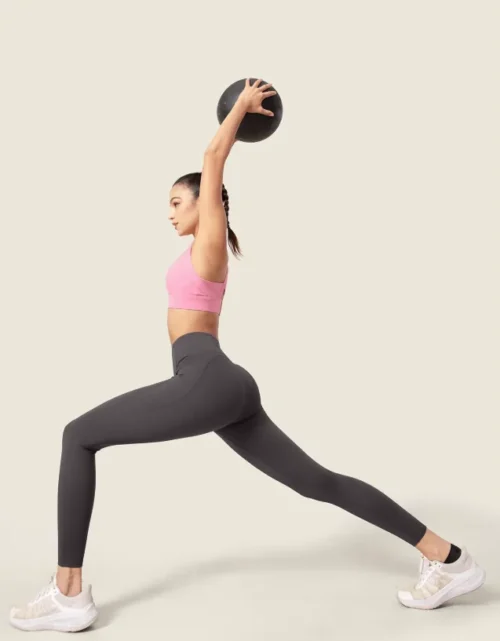
Women’s High Waisted Workout Lightweight Yoga Leggings for Pilates Running and Fitness Non See-Through
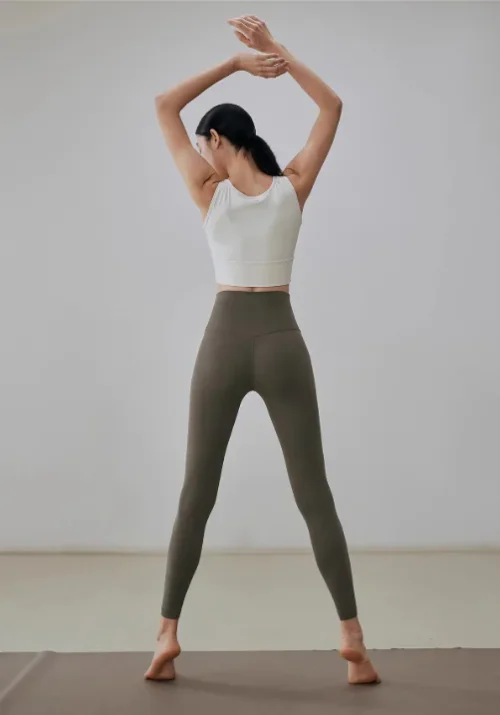
High Waisted Stretchy Lightweight Gym Running Activewear Yoga Leggings
Yoga leggings and set styles: developing a programme from a reference pair
This archive carries two reference leggings, both high-waisted and lightweight, so treat the page as a starting point rather than a range to shop. Pick the closer card, mark what stays and what changes, and the pattern is built from there. Cut-and-sew yoga leggings start at 100 pieces per style per colour, with sizes mixed inside one colourway; bonded or seam-sealed work starts at 200. Samples take 3–7 days and bulk production 15–25 days after sample approval.
Read the two reference leggings, then mark your changes
Both cards are high-waisted lightweight leggings written for Pilates, running, fitness and gym sessions, one described as non see-through and the other as stretchy. Neither is stock. The card gives a body, a rise and a look, while fabric, colour, size range, labels and packing come from your brief. Keep the link, then list the parts you are keeping: band height, leg length, panel lines, seam placement and the position of any logo.
A reference also sets a limit. If the programme needs a flare leg, a capri, a wide leg, a sculpting double knit or a bonded waistband, say so in the first message so the change is quoted against the card. A different pattern is a different style for the minimum: two leggings on different blocks count as two styles, each with its own 100 pieces per colour.
Settle rise, leg length and waistband before the fabric conversation
Rise, leg length and band decide whether the finished legging feels like the reference. We confirm waist, hip, rise and inseam on the first sample and grade from those numbers, on any size set you specify: plus, petite, tall, maternity and kids included, on US, EU or Asian grading.
Full length, 7/8, capri, flare and wide leg all come off our lines, and each changes the marker and the fabric consumption, so the choice belongs in the quotation. High-rise bands are built with or without a hidden waistband pocket, and a gusset is part of every full-length style. State the band height, how it is attached and the tension you want at the top of the size range.
Extended sizes are graded from the standard block rather than scaled up, with band tension and rise adjusted size by size so the fit holds at the end of the range.
Pick the knit by weight and blend together, never one without the other
Three blends cover the yoga programmes we run. Nylon-spandex gives the softest hand feel and the best opacity for its weight, at 220–260 GSM for full-length leggings. Polyester-spandex dries faster, costs less and takes sublimation, and needs more weight, around 230–240 GSM, for comparable coverage. Recycled polyester-spandex carries the same performance with recycled-content documentation arranged to the order. Sculpting leggings run 260–300 GSM on a high-density double knit.
Weight and blend are quoted as a pair, because 220 GSM nylon and 220 GSM polyester do not behave the same way. Swatch cards with composition and GSM written on each go out with the quotation. Where you already work with a mill, fabric can be bought from the supplier you nominate.
Knit structure is named on the spec sheet too: interlock and high-density double knit hold coverage under tension where an open jersey does not.
Check opacity on the lightest colourway, not on black
Squat-proof is the result of six decisions agreeing: weight and blend taken together, knit structure, spandex content and recovery, yarn coverage, colour, and pattern fit. A fabric that passes in black can go sheer in pale grey, so the lightest colourway in the range is tested first and every colourway is tested separately, with the fabric held at working extension over a contrasting board and photographed.
Pattern belongs on that list. If the back rise is cut too tight, good fabric is pulled past its working range and the seat thins under load, so fabric and pattern are signed off together rather than one after the other. Recovery is read at 30, 50 and 80 percent extension across warp, weft and bias, and the readings travel with the sample instead of waiting to be requested.
Where your market asks for OEKO-TEX Standard 100, GRS scope certificates or REACH documentation, panels can go to a laboratory you nominate, within China, and the report is passed on as it comes back.
Build the set: legging and top from one dye lot
Matched sets are where colour consistency across two garments matters most, and both pieces are cut from the same lot where the programme allows. A set is two styles for the minimum: 100 pieces of the legging and 100 of the top in the ordered colour. Tops for the upper half sit in the tank top archive, so a set brief normally names one reference from each page.
Colour is approved on lab dips before bulk fabric is bought, and dips run alongside pattern making. Deep blacks and dark navy get fastness checks to washing and perspiration before release.
Edges, decoration and the checks before packing
Flatlock and coverstitch seams are tested for elongation and recovery so the seam stretches with the fabric instead of popping, and that is what we specify on leggings. Laser cutting runs mainly on synthetics and seals the edge as it cuts, which suits clean leg and armhole openings. Bonded edges close without a stitch line, at 200 pieces per style per colour.
Decoration follows the fabric. Sublimation covers all-over print on polyester-rich cloth before cutting, screen print uses an elastic ink that stretches with the knit, heat transfer and silicone give flat low-profile marks, and embroidery is backed so the stitch area stays soft against skin. Sampling is charged, and the fee is offset against the invoice when a first order reaches 300 pieces of a style.
Incoming fabric is weighed on a circular cutter gsm scale and checked against the approved weight, colour and surface. Checks run through cutting, in-line construction, finishing and measurements, with needle detection on the packing line. Cartons are sampled to AQL 2.5 under ISO 9001, against an approved order file and a sealed pre-production sample.
| Decision | Options we work to | What it changes | Signed off on |
|---|---|---|---|
| Rise and waistband | High rise, with or without a hidden waistband pocket; band height and attachment stated in the brief | Where the band sits and how it holds at the top of the size range | Waist, hip and rise measured on the fit sample |
| Gusset and seam | Gusset on every full-length style; flatlock or coverstitch seam tested for elongation and recovery | Comfort at the crotch and how the seam behaves under stretch | Seam sample and stretch readings |
| Knit and weight | Nylon-spandex 220–260 GSM, polyester-spandex 230–240 GSM, sculpting double knit 260–300 GSM | Hand feel, drying time, opacity and the print route | Fabric swatch card with composition and GSM |
| Colour and dye lot | Lab dips before bulk dyeing; set pieces cut from one lot where the programme allows | Colour match between the legging and the top | Approved dip against the Pantone reference |
| Edge and decoration | Laser cut edge, bonded edge at 200 pieces, sublimation, elastic screen print, heat transfer, silicone | How the opening finishes and where artwork can sit | Decorated sample and sealed pre-production sample |
Send the card link or a tech pack with the quantity per colour, the size range, the fabric and the construction points that must change. For a set, send both references in one message so they are costed as one programme. The reply is a quotation built on that specification, with fabric swatches, a sampling date and a bulk window rather than a shelf price.
Frequently asked questions
What is the minimum order for a custom yoga legging style?
The minimum is 100 pieces per style per colour for cut-and-sew leggings, with sizes mixed inside one colourway. Bonded or seam-sealed construction starts at 200 pieces per style per colour. Styles cannot be combined to reach the minimum, because each one uses its own pattern and production setup, so two leggings on different blocks are quoted as two styles even when the fabric is the same.
Can I order a yoga legging and a matching top as one set?
Yes. A set is quoted as two styles, so the order carries 100 pieces of the legging and 100 of the top in the colour you choose. Where the programme allows, both pieces are cut from one dye lot so the colour matches across the set. Woven labels and hangtags start at 1,000 pieces, jacquard labels and silicone badges at 300, and those trim minimums sit alongside the garment minimum.
Which fabric should I choose for squat-proof yoga leggings?
Opacity comes from weight, blend, knit structure, spandex content and recovery, yarn coverage, colour and pattern together. Nylon-spandex at 220–260 GSM is the softest route with the best coverage for its weight; polyester-spandex needs 230–240 GSM to match that coverage and takes sublimation well. The lightest colourway is tested first, because a fabric that passes in black can go sheer in pale grey.
Do you make bonded or seamless yoga leggings as well as cut-and-sew?
Yes. Cut-and-sew covers most programmes and starts at 100 pieces per style per colour, with the widest choice of fabric, colour and print. Bonded and seam-sealed construction runs at 200 pieces per style per colour, where edges close without a stitch line and bodies come off the machine closer to finished shape. Both routes are quoted from the same tech pack, so you can compare them side by side.
How long do yoga legging samples and bulk production take?
Samples take 3–7 days once the tech pack, fabric and colour direction are agreed. Bulk production takes 15–25 days after sample approval and deposit. Both periods cover factory work only and do not include transport. Lab dips run alongside pattern making rather than after it, so colour approval does not push the sample date back, and the quotation records both windows with the delivery term.
What do you need from me to quote a yoga legging programme?
Send a tech pack, a measurement sheet or a link to the closest reference legging, with the quantity per colour, the size range, the fabric and weight you have in mind, and the construction or decoration points that must change. Trade terms are EXW, FOB Shenzhen Yantian or DDP, and payment is T/T with a deposit and the balance before shipment, or L/C at sight for full container loads.