- Email salesman8@yctshirt.cn
- TEL/WECHAT +86-15876493800
- WhatsApp +86-15876493800
- Email salesman8@yctshirt.cn
- TEL/WECHAT +86-15876493800
- WhatsApp +86-15876493800
Pima Cotton T-Shirt Manufacturer: A Sourcing Guide

This guide explains what qualifies as Pima cotton, how to verify it on a bulk order, how to read the yarn and knit specification, which finishing steps the hand feel depends on, and which test thresholds to agree before production. Minimum order is 100 pcs per style per colour, sampling takes 3–7 days from a confirmed tech pack, and we are ISO 9001 certified with inspection at cutting, in-line and final stage.
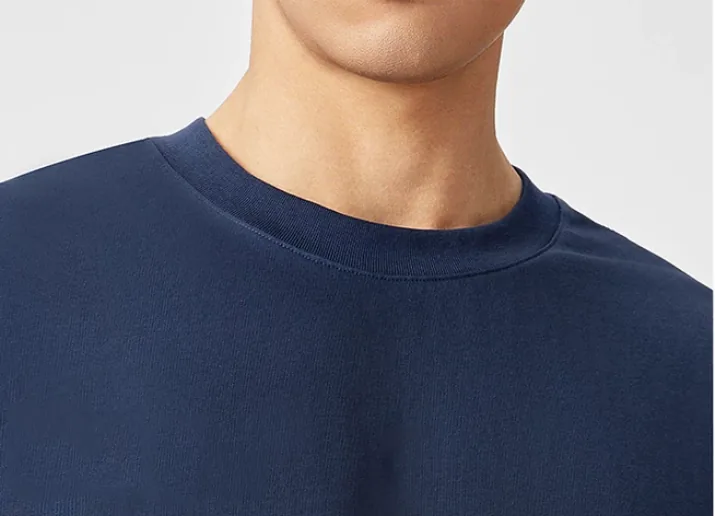
Pima is one of the few fabric upgrades a customer can feel before they can name it, which is why it sells. It is also one of the easiest specs for a supplier to quietly dilute, because the difference between genuine extra-long staple cotton and a blend that merely imitates it is not visible in a finished tee.
This guide covers what actually qualifies as Pima, how to verify it on a bulk order, how to read the yarn and knit specification, which finishing steps the hand feel depends on, and the test thresholds worth agreeing before production. It is written for brand owners and sourcing teams buying at scale.
1. What Actually Qualifies as Pima Cotton
Pima belongs to the extra-long staple (ELS) category of cotton, alongside Egyptian Giza and Sea Island. What defines it is staple length — the length of the individual fibre — which for ELS cotton typically runs around 34 mm and above, compared with roughly 26–29 mm for standard upland cotton.
Longer fibres mean fewer fibre ends protruding from the yarn. That single fact explains every property buyers pay for: a smoother surface, less pilling, better dye uptake and a natural lustre that does not wash out after a season.
Where it comes from matters for paperwork:
- Peruvian Pima — the largest source of Pima on the global market today.
- American Pima — grown in the US Southwest, and the only Pima that can carry the Supima trademark, which is licensed and traceable.
- Australian and Israeli ELS cotton — often grouped in the same specification, less commonly branded.
Note the distinction: Pima describes the fibre type, Supima is a protected brand with a licensing chain. If your marketing says Supima, the whole supply chain has to be licensed and documented, not just the fabric mill.
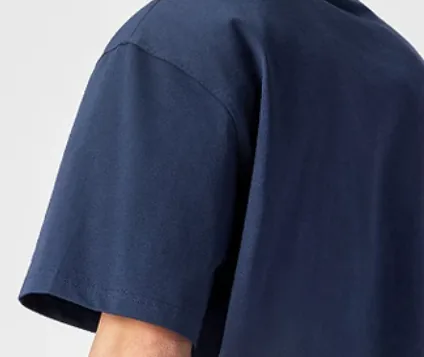
2. How to Verify You Are Getting Real Pima
Substitution happens upstream, before your factory receives the fabric, so asking your garment supplier is not enough. A credible program has documentation at every step:
- Mill certificate — confirming fibre origin and staple length for the specific lot.
- Transaction certificates — required if you use the Supima trademark; they chain from the spinner through knitting to garment.
- Fibre length testing — HVI or comparable instrument testing gives an objective number rather than a claim.
- Third-party lab verification — SGS, Intertek or Bureau Veritas can test fibre composition and length on bulk fabric, and on finished garments after delivery.
- Blend disclosure — many “Pima” fabrics are cotton-rich blends. Ask for the exact fibre composition in writing, not a category name.
If you are building a brand on this claim, budget for one third-party test per season. It costs far less than discovering the problem through your return rate.
| Document | What it verifies |
|---|---|
| Mill certificate | Fibre origin and staple length for the specific lot |
| Transaction certificates | Required for the Supima trademark; chains from the spinner through knitting to the garment |
| Fibre length testing (HVI or comparable) | An objective number rather than a claim |
| Third-party lab verification | Fibre composition and length on bulk fabric and on finished garments after delivery; SGS, Intertek and Bureau Veritas all run these tests |
| Blend disclosure in writing | The exact fibre composition instead of a category name |
Every document above can be requested before a deposit, and the fibre composition you agree in writing becomes the baseline the bulk is checked against. Third-party testing can be arranged when you want an independent result, with the laboratory agreed with you per order.
One practical note: paper can be checked in a day, but a feel-based judgement cannot. If a supplier cannot produce the documents above for the lot you are buying, treat the claim as unverified regardless of how the fabric feels in the hand.
3. Reading the Yarn and Knit Specification
Two identical-looking Pima tees can differ substantially in cost and performance because of four variables that should all appear in your tech pack.
- Yarn count (Ne) — higher numbers mean finer yarn. Ne 30s is a sturdy everyday weight, Ne 40s–50s is the premium hand-feel range, Ne 60s and above is very fine and correspondingly delicate.
- Singles or plied — two-ply yarn twists two finer strands together. It is smoother, stronger and more pill-resistant, and it costs more. On a premium basics program, this is usually where the quality difference actually sits.
- Knit structure — single jersey is the default tee; interlock is thicker, more stable and holds shape better; rib and piqué are used for collars, cuffs and polo bodies respectively.
- GSM — fabric weight in grams per square metre. Most premium Pima tees sit between roughly 150 and 220 gsm, but weight alone tells you nothing without count and structure.
When comparing quotes from two suppliers, compare all four. A lower price almost always means one of them is different, most commonly a single-ply yarn or a coarser count.
4. Finishing: Where the Hand Feel Comes From
The softness customers credit to the cotton is often created in finishing. These are the steps to specify, and what each one does:
- Singeing — burns off protruding fibre ends. Directly reduces pilling and gives a cleaner surface.
- Mercerising — treats the yarn or fabric with caustic soda under tension. Adds lustre, improves dye uptake and increases strength. Meaningfully improves appearance; also adds cost.
- Enzyme or bio-polishing — removes surface fuzz with enzymes. Softer hand feel now, slightly thinner fabric.
- Compaction / pre-shrinking — mechanically stabilises the fabric so shrinkage stays inside tolerance after washing.
If you want a soft tee that stays the same size, over-finishing is the risk to watch: heavy enzyme treatment makes a fabric feel wonderful in the sample and lose structure after ten washes.
5. Set Pass/Fail Numbers Before Bulk
“Good quality” is not a specification. Put these thresholds in writing, with the test method, before you approve the pre-production sample:
- Shrinkage — measured after agreed wash cycles (ISO 6330 or AATCC 135). State a maximum percentage in both length and width. Around 3–5% is a common retail ceiling.
- Colour fastness — ISO 105 series: to washing, to rubbing (dry and wet), and to perspiration for next-to-skin basics.
- Pilling — ISO 12945 or comparable, with a minimum rating agreed in advance.
- Dimensional stability of the collar — neckline curl and rib recovery are the most complained-about failures on premium tees, and the easiest to miss in inspection.
- Fibre composition verification — against the declared blend, with a tolerance.
Test the pre-production sample made on bulk fabric and bulk trim, not a lab dip. Finished garment performance depends on the whole assembly.
We are ISO 9001 certified and inspect at cutting, in-line and final stage. Third-party inspection before shipment is welcome.
6. Cost: What You Pay For and Where You Can Save
Pima yarn costs materially more than standard cotton — generally tens of percent rather than a few points — and the gap widens with finer counts and plied yarns. The drivers, in descending order of impact:
- Yarn — count, whether plied, and whether it is certified with a traceability chain.
- Fabric construction — finer gauge knitting takes longer per metre.
- Finishing steps — each additional process adds cost and lead time.
- Order quantity — yarn lots have minimums, and dye lots below a threshold carry setup penalties.
- Colour count — every additional colourway is another dye lot.
Effective ways to hit a target price: reduce colourways on the first drop, use one fabric across multiple styles so the yarn lot can be bought in volume, or step down one yarn count. Switching to a blended yarn while keeping the Pima claim in your marketing is not one of them.
7. MOQ, Sampling and Lead Times
- Our MOQ: 100 pcs per style per colour. Every order is made to your specification — there is no in-stock programme to buy from, so the fabric is knitted or sourced for you, dyed to your lab dip, and cut to your pattern and size set. A particular Pima yarn count and GSM is knitted to your order rather than taken off a shelf, which is exactly what that floor covers.
- Sampling: 3–7 days from a confirmed tech pack to a physical sample in your hands, before shipping.
- Order a pre-production sample on bulk fabric before releasing bulk — this is where shrinkage, collar recovery and hand feel get validated together.
- Bulk lead time depends on yarn availability and order size. Ask for it in writing, tied to sample approval rather than to deposit date.
A tech pack for a premium tee should state: fibre origin and staple requirement, yarn count and ply, knit structure, GSM with tolerance, finishing steps, shrinkage limit, colour references (Pantone TCX codes, not screen colours), and labelling requirements.
8. Frequently Asked Questions
Is Pima the same as Supima?
No. Pima is the fibre type; Supima is a licensed trademark covering American-grown Pima with a documented chain of custody. Using the Supima name requires certification at every stage of the supply chain.
How can I tell real Pima from a blended imitation?
Not reliably by touch or eye. Request mill certificates and fibre-length testing, and verify composition at a third-party lab on the bulk fabric or a finished garment.
What our factory can do?
We run 4 production lines with 180+ skilled technicians across 18,000+ m² of factory space — 8,000 m² in Dongguan plus a 10,000+ m² self-built plant in Hunan — with monthly capacity of 150,000–200,000 pcs, manufacturing knitwear since 2009.
Does finer automatically mean better?
No. Very fine counts feel luxurious and drape beautifully, but they show seams, wear through faster and require stricter care. Choose the count that matches what your customer will actually do in the garment.
Can Pima be blended with elastane?
Yes, and it commonly is for fitted styles — typically at single-digit percentages. Declare the full composition on the label, including the elastane percentage.
Related pages: the certified fabrics answer lists which documents we can supply with a batch; the T-shirt manufacturer page shows where Pima sits in our fabric options; and the T-shirt category holds the current styles that can be specified in Pima.
Next Step
Send your target GSM, yarn count and quantity and we will tell you what is available in Peruvian or American Pima, what the lead time looks like, and whether your target price is reachable. If you are benchmarking two fabric options, ask for both sampled side by side — that comparison answers more questions than any spec sheet.
Browse our t-shirt range and our polo shirt range, or read our hoodie manufacturing guide if fleece is part of the same program. Ready to move? Request a quote.
If you are building a knitwear program rather than a single style, our seamless and bonded construction guide explains the other main construction route we run.
About us: read how the SLSPOLO factory is set up, or browse the full private-label knitwear catalog.
When you are ready to cost a programme, our polo shirt manufacturing page and golf polo page set out minimums, sampling times and the six items to include when you ask for a quote.