Golf Polo Shirt Manufacturer in China — Custom & Team Orders
A golf polo is judged in conditions a normal polo never sees: four hours of sun, sweat and movement, then an industrial wash, then worn again next weekend. Collars that curl after nine holes, sleeves that ride up on the backswing and colours that fade by mid-season are all specification failures — decided at sampling, not at final inspection.
SLSPOLO has been manufacturing knitwear for export since 2009. This page covers what we build for golf and team programmes, which fabric and construction choices actually matter on the course, and what to send us so the first quote is accurate. The numbers here are the same ones we publish — no negotiated exceptions.
Golf Polo Styles and Fits We Manufacture
Most golf programmes start from one of the constructions below rather than a blank sheet. Current shapes are in our polo shirt category — send the closest one and we will engineer from there.
Classic fit — the traditional club silhouette. Straight body, standard sleeve length, works across the widest size range.
Athletic / slim fit — tapered body, shorter sleeve, stretch interlock. The default for younger teams and performance brands.
Ladies’ cut — not a scaled-down men’s body: narrower shoulder, shaped waist, adjusted placket and sleeve. Graded from its own base pattern.
Team kit polos — sublimation-ready polyester builds with space for sponsor logos, numbers and names.
Corporate golf days — event-volume orders where one logo placement and one colour dominate, and unit cost is the main lever.
Performance Fabrics: What Actually Works on the Course
Golf polo fabric is a balance of four properties — moisture management, stretch recovery, colourfastness and weight — and pushing one too hard usually costs another.
Polyester piqué, 160–220 gsm — the workhorse. Breathable, holds texture, prints and embroiders cleanly.
Poly-spandex interlock, 180–240 gsm — four-way stretch, smoother face, the standard for athletic fits.
Recycled polyester (rPET) — same performance envelope as virgin poly. If your market requires traceability, ask for the transaction certificates when you ask for the price, not after.
Cotton and CVC blends — still requested for club and corporate programmes where a natural hand matters more than technical performance. Higher weight, less stretch.
Two honest notes. First, moisture wicking is a construction property, not a coating — a knit engineered to move sweat will outlast any finish applied afterward. Second, if UV protection matters for your market, ask us which knits carry a tested UPF rating rather than assuming all polyester knits do.
Collars, Plackets and Details That Survive 18 Holes
Collar construction — knit collars with the right yarn recover after sweat and wash; lightweight fused collars on performance knits are the most common source of mid-season curl. This is the single detail worth over-specifying.
Placket — two or three buttons, fused or knit facing, reinforced box stitch at the base. On stretch fabrics the facing must move with the shell or it will ripple.
Sleeves and cuffs — sleeve length and cuff tension decide whether the sleeve stays put during a swing. Self-fabric cuffs with a touch of elastane hold shape longest.
Side vents and hem — vented hems for movement, drop-tail where the garment is worn untucked.
Hidden details — taped neck seams, branded zip pulls where specified, and reflective prints for evening-play programmes.
Send these decisions with your request. Leaving them open means we quote our house standard — which is a good standard, but may not be the garment you pictured.
Decoration for Teams and Corporate Orders
Flat embroidery — the club default for left-chest crests at 8–10 cm. On light performance knits, backing choice decides whether the logo puckers.
Heat transfer — numbers, names and sponsor logos on team kits; near-flat hand feel and full colour.
Sublimation — polyester only. Unlimited colour across the panel — the standard for full team kits with per-player names.
Silicone and high-density transfers — raised, durable brand marks on technical faces.
Trim is quoted separately: woven neck labels, printed care and size labels, hangtags and individual polybags. For event programmes, keeping labels generic is usually the single largest trim saving.
Minimum Order Quantity, Sampling and Lead Time
Our published minimums sit between 50 and 220 pieces per style. Stock shapes start at the lower figure; a fully custom build — new knit, new pattern, new colourways — sits at the top. Where you land depends on how much you change, not on negotiation.
Sampling — 3–7 days for a stock shape with your branding; longer if the build needs a new pattern or a fabric knitted to order.
Bulk production — 15–25 days after sample approval and deposit, depending on quantity and fabric availability.
Repeats — faster; the pattern, grading and approved sample already exist.
For team kits with individual names and numbers, expect the decoration stage — not the sewing — to drive the timeline. Tell us the roster size and we will quote the realistic date.
Quality Control Before Shipment
Inspection runs at three points: incoming fabric, in-line checks during the run, and a final check against your approved sample before packing. Our plant is certified to ISO 9001.
Collar recovery — sweat-and-wash simulation on sample collars, because curl shows up after the buyer’s first laundering cycle.
Colourfastness — to sweat, light and washing; the three exposures a golf polo actually gets.
Stretch recovery — elbows, shoulders and plackets checked for bagging after repeated stretch.
Pilling — especially on poly-cotton blends and brushed faces.
Dimensions — the full size run against your spec sheet, including the ladies’ grade if your programme runs both blocks.
How Golf Polo Pricing Is Actually Built
Fibre and construction — poly-spandex interlock costs more than plain piqué; recycled poly carries a small premium.
Fit engineering — a ladies’ block built from its own pattern adds sampling labour but not bulk cost; a shared block graded down saves the sampling but fits worse.
Decoration count — every placement adds handling per piece; sublimation collapses many placements into one pass.
Order size and colourways — one set-up spread across more pieces is the cheapest way down in unit cost.
Trims — custom labels, zip pulls and packaging each add a line; generic equivalents remove it.
If you have a target price, tell us early. We would rather adjust construction honestly — simpler collar, plainer placket, one fewer placement — than shave fabric quality where your customer will feel it in the third wash.
The Factory Behind the Quote
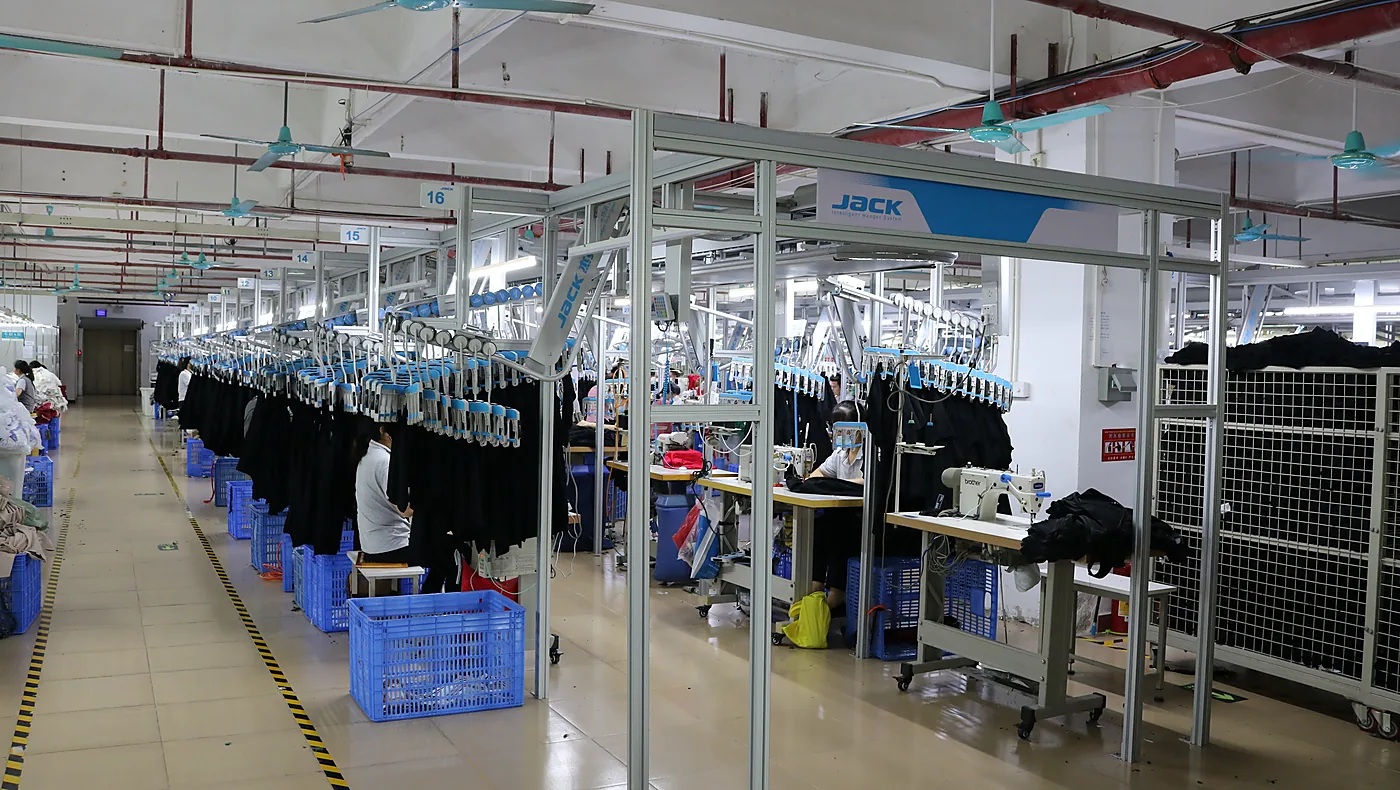
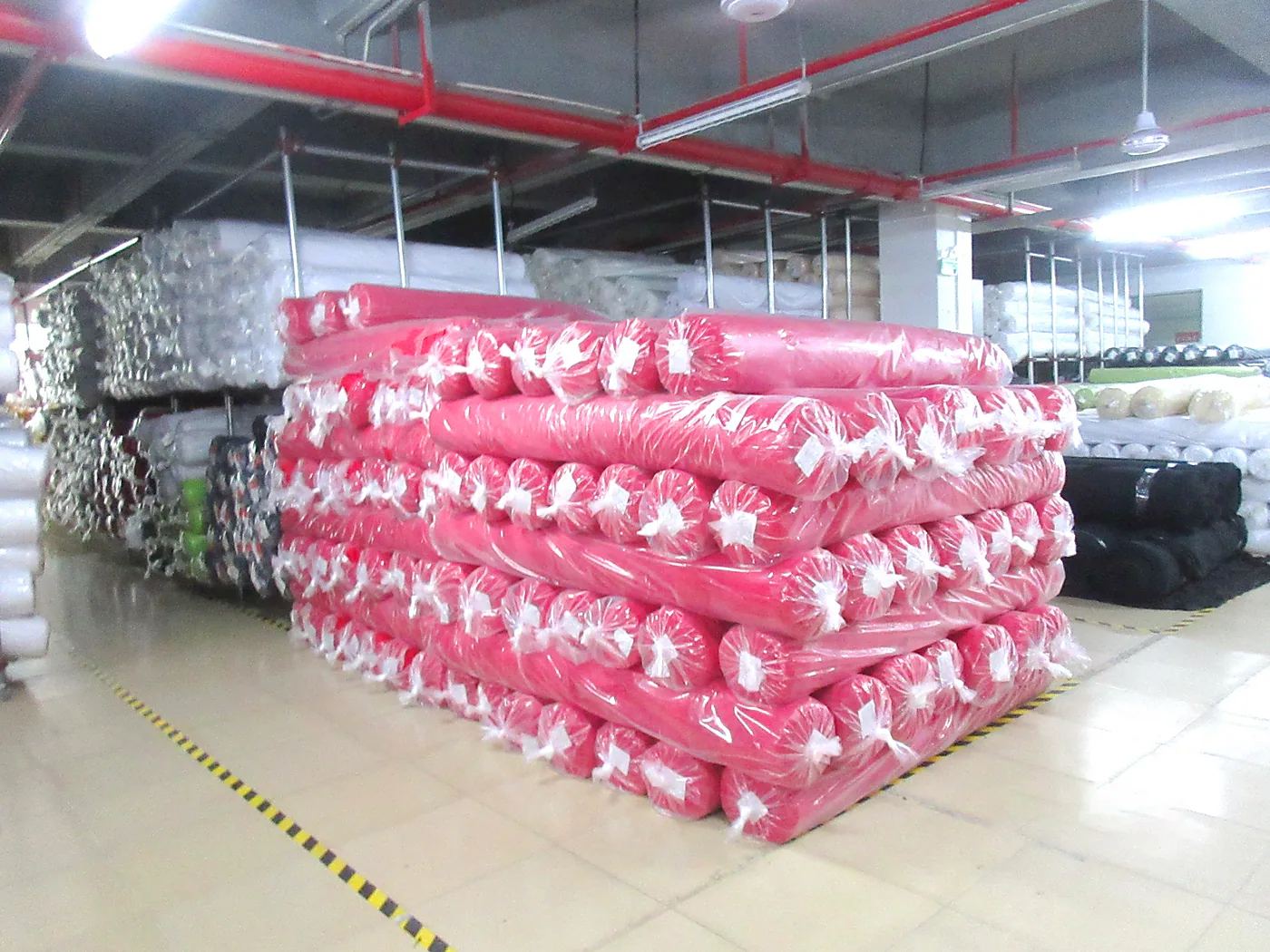
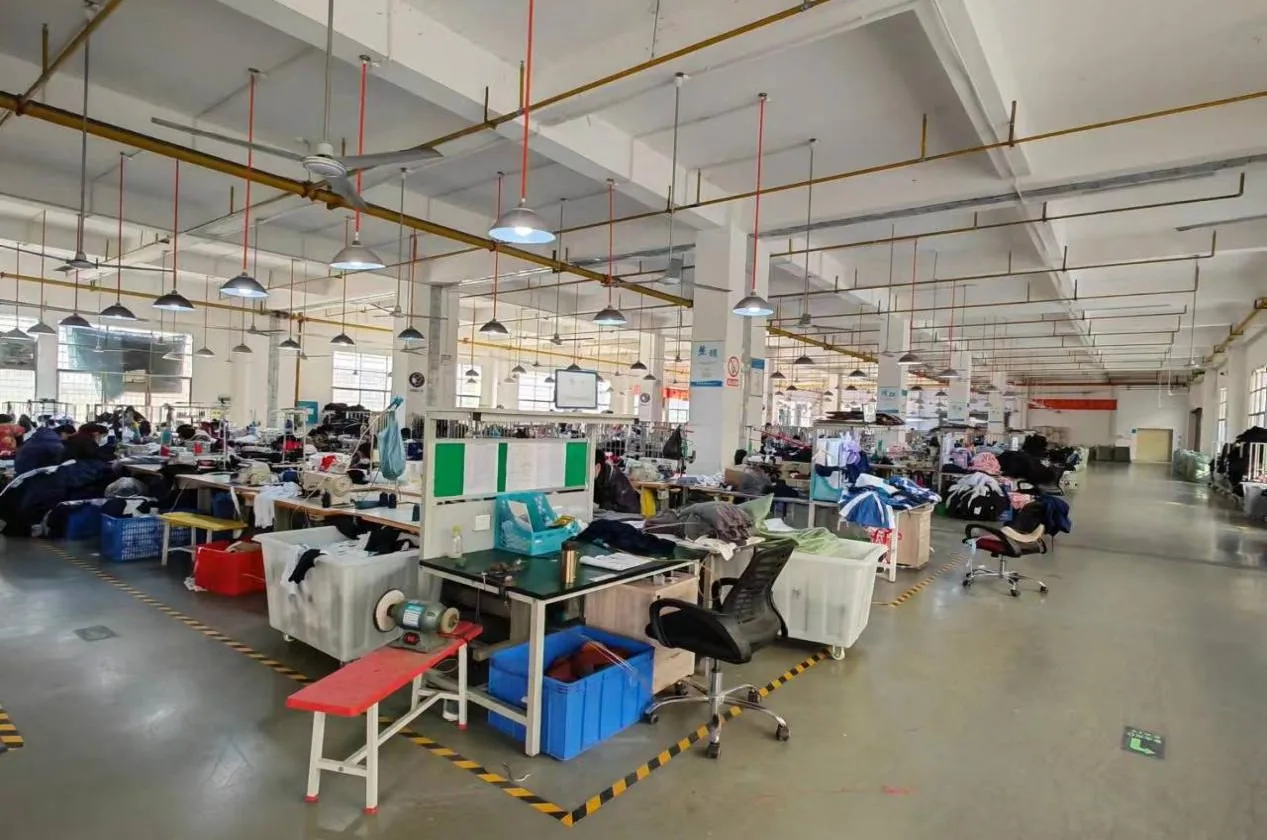
We operate 18,000+ m² across two plants with around 180 skilled workers on four production lines, producing 150,000–200,000 pieces per month. Our main plant is in Humen, Dongguan, with a second plant in Hunan. Details are on the about page, and you are welcome to visit the factory before committing to bulk.
Golf polos run on the same lines as our general polo programme, so capacity is shared and lead times behave the same way.
What to Send for an Accurate Quote
The reference — a tech pack, or photographs of a garment you want to match.
Fabric: composition, structure and target gsm — or the performance you need (stretch, wicking, weight).
Fit: men’s, ladies’ or both, and whether you need athletic or classic blocks.
Decoration: method, placements, sizes — for team kits, the roster format.
Quantity per colourway and size range, including extended sizes.
Target price and delivery terms — FOB Shenzhen and Hong Kong are our usual baselines.
Vector artwork can follow later. If you are unsure which fabric to pick, describe the end use and climate — that is enough for us to propose two or three constructions with prices.
Frequently Asked Questions
What is the minimum order for custom golf polos?
Between 50 and 220 pieces per style. Stock shapes with your branding start at the lower figure; fully custom builds with their own knit and pattern sit at the higher one.
Can you make men’s and ladies’ versions of the same polo?
Yes. The ladies’ version is built from its own base pattern — narrower shoulder, shaped waist, adjusted placket — rather than graded down from the men’s block. That costs a little more in sampling and fits considerably better.
Which decoration method is best for team kits?
For full-colour team kits with per-player names and numbers, sublimation on polyester is the standard and collapses many placements into one pass. For club crests and corporate logos, flat embroidery on the left chest remains the default.
Will the collar curl after washing?
Not if it is specified correctly. Collar curl traces back to lightweight fused facings on performance knits; we use knitted collars matched to the shell fabric, and we wash-test sample collars before bulk cutting.
Can you supply recycled polyester for our sustainability claims?
Yes. Ask for the transaction certificates together with the price so the traceability is confirmed before you commit, not after.
Can I visit the factory before placing a bulk order?
Yes, and we encourage it. Our plant is in Humen, Dongguan, Guangdong. Arrange a visit through the factory visit page, or reach us at salesman8@yctshirt.cn to fix a date.
Send us the reference, the fit and your target price — we will come back with one quote and the options behind it.