- Email salesman8@yctshirt.cn
- TEL/WECHAT +86-15876493800
- WhatsApp +86-15876493800
- Email salesman8@yctshirt.cn
- TEL/WECHAT +86-15876493800
- WhatsApp +86-15876493800
Custom Hoodie Manufacturer: A Buyer’s Guide

This buyer guide covers what to specify on a bulk hoodie order: fabric weight from 250 to 550 GSM, the four blocks we produce in-house, decoration and private label, how unit price is built, and what to check before releasing a deposit. Minimum order is 100 pcs per style per colour, sampling takes 3–7 days, and we run 4 lines with 180+ technicians across 18,000+ square metres.
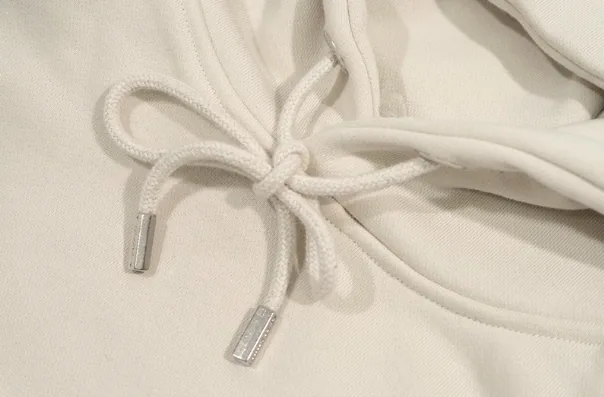
Most hoodie sourcing problems are decided before the first email is sent. Buyers who know their fabric weight, block and decoration method get accurate quotes in one round. Buyers who send a mood board and ask “how much?” spend three weeks going back and forth — and often end up with a garment that misses the brief anyway.
This guide is written for brand owners, product managers and sourcing teams planning a bulk hoodie order. It covers what to specify, how pricing is built, how sampling and lead times actually work, and what to check before you release a deposit. Where we quote our own numbers, they are the same figures we publish on our hoodie category page.
If you already know what you want and need a number rather than background reading, go straight to our hoodie manufacturing page — it lists the minimums, sampling and bulk lead times, and the six items to send for a quote.
1. Specify the Fabric and Weight First
Fabric weight — measured in grams per square metre (gsm) — drives both the hand feel and the unit cost more than any other single variable. A 280 gsm loop-back French terry and a 480 gsm brushed fleece are both “hoodies”, but they sit in entirely different price bands and sell in different seasons.
- 250–320 gsm loop-back French terry — smooth face, looped back. Breathable, good for layering, spring/summer and year-round basics.
- 320–400 gsm brushed fleece — the mainstream choice for everyday pullover hoodies. Warm, soft on the inside, holds print well.
- 400–550 gsm heavyweight fleece — structured, premium hand feel, used for streetwear drops and oversized blocks.
At our Dongguan plant we run hoodies from 250–550 gsm loop-back and brushed fleece. If you are unsure which weight to choose, decide by end use: a gym or layering piece belongs at the low end, a winter retail hoodie in the middle, and a streetwear statement piece at the top.
Fibre content matters just as much. Cotton-rich blends feel better and take dye more deeply; polyester-heavy blends hold shape, resist shrinking and cost less. Most bulk programs land somewhere between 60/40 and 80/20 cotton/polyester, but the right ratio depends on whether you are optimising for hand feel, durability or price.
| End use | Weight position in the range |
|---|---|
| Gym and layering pieces | Lower end |
| Winter retail hoodies | Middle |
| Streetwear statement pieces | Top end |
All three positions are cut and sewn from knitted fabric on our own lines, so the weight you choose does not change the terms: the minimum stays 100 pcs per style per colour, and sampling takes 3–7 days whichever band you pick. If you are comparing weights across suppliers, the GSM calculator converts the units first so the quotes are comparable.
Weight is also the spec most often left blank in a first enquiry. Stating a band, even a rough one, removes the largest single unknown from the quote and makes the first sample far more likely to match what you had in mind.
2. Choose the Block: Pullover, Zip-Up, Oversized or Cropped
The block is the garment’s silhouette, and it should follow your customer, not the trend cycle. Four blocks cover the large majority of bulk hoodie programs:
- Pullover — the default. Cleanest front panel for large prints, lowest cost per unit, easiest to size.
- Zip-up — more components (zipper tape, slider, two front panels), so expect a higher unit cost and a slightly longer make-up time.
- Oversized / boxy — dropped shoulder, wider body, heavier rib. Very popular in streetwear; needs a heavier fabric to drape correctly.
- Cropped — shortened body, often paired with a raw or ribbed hem. Commonly produced for womenswear and athleisure.
We produce all four in-house. One practical tip: if you are developing a new range, start with one block in two colours rather than three blocks in one colour. You learn more about fit and fabric behaviour per dollar spent, and you keep the order above minimums.
3. Decoration: Printing, Embroidery and Private Label
Decoration is where a generic hoodie becomes your product. The main options, and what each is good for:
- Screen printing — most cost-effective at volume, durable, best for flat colour artwork. Cost scales with the number of screens (colours).
- DTG (direct-to-garment) — no screen charges, good for photographic or high-colour artwork and small runs; less durable than screen over many washes.
- Puff and specialty inks — raised or textured effects; adds cost and requires careful curing.
- Embroidery — the premium option for logos. Priced by stitch count, holds up extremely well, works on cuffs, chest and hood.
- Appliqué and patches — higher cost, strong visual identity, common in streetwear.
- Private label — woven neck labels, care labels, hangtags and packaging. Small unit cost, large perceived-value gain.
We handle printing, embroidery and private label in-house, which removes a subcontractor step from the critical path. That is usually worth one to two weeks on a first order.
4. MOQ, Sampling and Lead Times
Two numbers define the start of any program: the minimum order quantity and the sampling time.
- Our MOQ: 100 pcs per style per colour. Every order is made to your specification — there is no in-stock programme to buy from, so the fabric is knitted or sourced for you, dyed to your lab dip, and cut to your pattern and size set. The floor is the fixed work in every programme — fabric knitting or dyeing, pattern making, a full size set and line setup — which costs essentially the same whether you order 100 pieces or 100,000.
- Sampling: 3–7 days. That is the time from confirmed tech pack to a physical sample in your hands, before shipping.
- Bulk lead time varies with fabric availability, order size and how many decoration steps the garment needs. Ask for it in writing, tied to sample approval rather than to deposit date.
A tech pack is the single biggest accelerator. It should include a flat sketch or reference photo, measurements with tolerances, fabric composition and gsm, colour references (Pantone TCX codes, not screen colours), artwork files with placement and size, and labelling requirements. Buyers who send a tech pack get a first-round quote that holds; buyers who don’t get an estimate that moves.
5. How Hoodie Pricing Is Actually Built
Unit price is not arbitrary — it is the sum of a small number of drivers. Understanding them lets you trade one against another instead of just asking for a discount.
- Fabric — the largest component. Weight, fibre blend and whether the fabric is in stock or needs to be knitted and dyed.
- Order quantity — fixed costs (pattern, screens, sample, setup) are amortised across units. Doubling quantity rarely halves price, but it always lowers it.
- Decoration count — each print location, each embroidery, each label adds both cost and handling time.
- Trims and hardware — drawstrings with metal tips, branded eyelets, custom zippers and rib all add up quickly.
- Colour count — more colourways means more dye lots and more setup, especially at low volume.
If you need to hit a target price, the effective levers are usually: reduce decoration locations, consolidate colourways, move to an in-stock fabric, or increase quantity. Cutting fabric weight to save cost is the lever we would push back on — it changes the product your customer receives.
6. Quality Control: What to Ask Before You Commit
Any factory will say it has quality control. The useful question is what specifically gets checked, at which stage, and what happens when something fails. Ask about:
- Fabric inspection before cutting — shade variation, weight deviation and defects.
- In-line checks during sewing, not just a final pass at the end.
- Measurement checks against the approved sample across a size set, not just one size.
- Print and embroidery adhesion and wash testing.
- A documented final inspection with an acceptable quality limit you agree in advance.
- Whether third-party inspection is accepted before shipment.
We are ISO 9001 certified and run inspection at cutting, in-line and final stage. Third-party inspection before shipment is welcome — a factory that resists it is telling you something.
7. Factory Capability: Why Scale Matters for a Bulk Program
Capability questions matter less on a 200-piece order and a lot more on a 20,000-piece program. The relevant figures for us:
- 18,000+ m² of production space — 8,000 m² in Dongguan plus a 10,000+ m² self-built plant in Hunan, which gives us room to allocate capacity when a program scales up.
- 4 production lines with 180+ skilled technicians.
- 150,000–200,000 pcs monthly capacity, so large seasonal drops do not crowd out smaller programs.
- Knitwear manufacturing experience since 2009, which is where the pattern and grading knowledge comes from.
Practically, dual-site capacity means a reorder in Q4 is less likely to be quoted with a lead time that has quietly doubled.
8. Frequently Asked Questions
Can I order a sample before committing to bulk?
Yes. Sampling takes 3–7 days from a confirmed tech pack. Most buyers order one fit sample, then a pre-production sample in the actual bulk fabric.
What is the difference between OEM and ODM here?
OEM means you supply the design and we produce to it. ODM means you choose from our existing blocks and fabrics and we adapt them with your branding — faster and cheaper, with less design exclusivity.
Can I mix sizes and colours within one order?
Yes — sizes and colours can be mixed inside one order. The MOQ applies per style per colour, so budget 100 pcs in each colourway you order.
Do you ship worldwide?
Yes. We ship to North America, Europe, Australia, Japan, South Korea, the Middle East and South America, and work with your forwarder or ours.
Will my designs be kept confidential?
Yes. We sign NDAs before tech pack exchange and do not feature client product in our marketing without written permission.
Related pages: the hoodie manufacturer page details blocks, fabrics and decoration; the manufacturing-range answer summarises what the factory makes; and the hoodie category lists current reference styles.
Next Step
If you have a tech pack, send it with your target quantity and delivery window and you will get a firm quote rather than an estimate. If you are still at the concept stage, send your reference images and target price and we will tell you which fabric and block will get you there — or tell you honestly if the target is not reachable.
Browse our hoodie range for available blocks, or request a quote to start a conversation.
Related guides for other parts of your range: our seamless and bonded knitting guide covers sew-free construction and wash testing, and our Pima cotton sourcing guide covers fibre verification and yarn specification.
About us: read how the SLSPOLO factory is set up, or browse the full private-label knitwear catalog.